Odd Morning

Fresh Strategies for Bold Missions


Category: Think Tank

  • The 2025 Finish Line

    The 2025 Finish Line

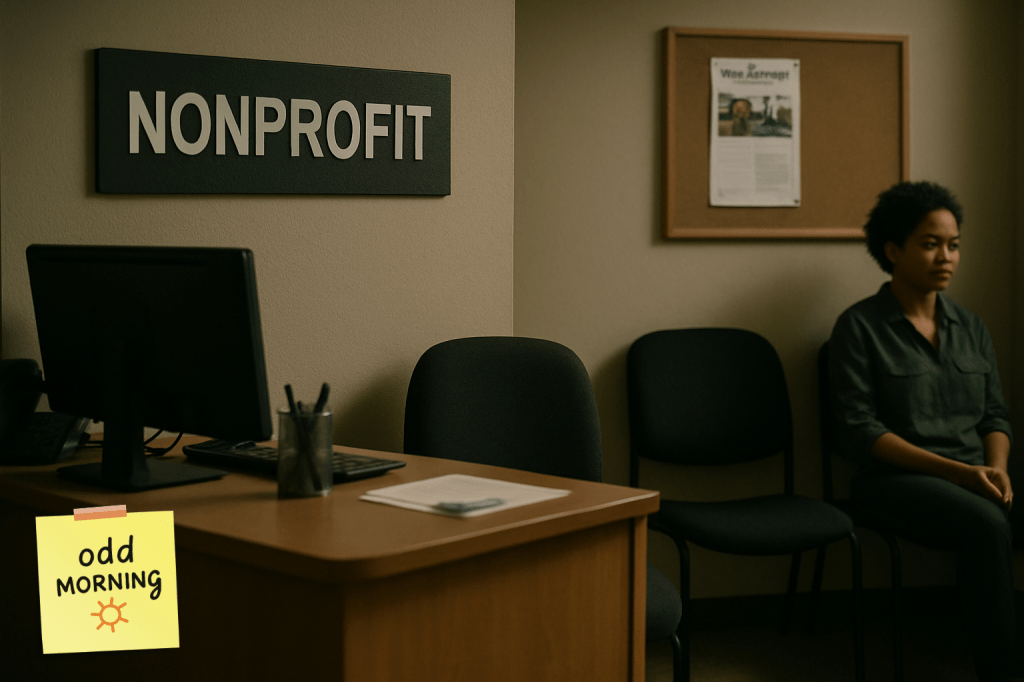
    There is about one week left in the year. That means nonprofit offices everywhere are in a very specific mode. Calendars are full. Inboxes are loud. Coffee is doing most of the work.

    Fundraising deadlines stack up. Donor decisions roll in. Reporting and programs do not pause. End-of-year logistics still need attention. Everyone is moving fast and hoping the calendar cooperates.

    Ending the year well often means doing ordinary work under extraordinary pressure.

    I almost skipped this month’s post because I am living this season too. I work in the nonprofit sector. Right now, most of us are juggling long days, urgent tasks, and the mental checklist of what still needs to be wrapped up before the year closes.

    This one is for you.

    This post is for the people who keep showing up with care and competence when the pace is relentless. Development teams watching year-end numbers. Program staff serving clients through the holidays. Operations folks keeping the wheels on. Leaders trying to end the year well while already thinking about the next one.

    Showing up with care and competence during the busiest weeks of the year is its own kind of leadership.

    You got this.


    I wish you a happy, bold mission holiday season.

  • Shared Identity for Bold Missions

    Shared Identity for Bold Missions

    I sat in a public meeting with representatives from multiple social service organizations. We gathered to discuss working together to meet local needs.

    Partway through, someone raised their hand and said, “I actually receive services. I am one of the people you’re talking about. When you say ‘them,’ you’re talking about me. I am sitting right here.”

    That moment stayed with me because it revealed something that happens across organizations every day. We often talk about the people we serve as if they are separate from the people doing the serving. Not intentionally. Most often, out of habit and language patterns we inherited.

    Still, those bad habits communicate power dynamics whether we mean to or not.

    What struck me most was how easily I have fallen into the same phrasing. It reminded me that I am part of this dynamic, not outside it.


    The Words We Use Shape How We See Our Community

    When we default to language that divides “us” from “them,” we frame the community as two groups:

    • those who help (staff, volunteers, donors)
    • those who need help

    But that is not how real life works.

    Many of us move in and out of need over time. A donor may later need assistance. A volunteer may once have received help. A staff member may have grown up in a program they now serve.

    Communities are ecosystems, not categories.

    How can we practice seeing our neighbors with shared identity, not as roles in a service model?


    Start Here

    Authentic change starts with new habits.

    I challenge you to use the same language in every setting and for every audience.

    By that, I mean consistency in tone, labels, framing, and the way you describe the people you walk alongside.

    A helpful first step is noticing when you segment your message without intending to.

    When I began adopting unsegmented communication, I was surprised by how often my default language created separation. Paying attention changed both my language and my internal posture.

    Let’s practice using consistent language across settings:

    Internal audiences

    • Community meetings
    • Staff emails
    • Board agendas
    • Meeting minutes

    External audiences

    • Website copy
    • Annual appeals
    • Public meetings
    • Conversations with donors
    • Social posts

    Using the same words as if everyone is in the room forces us to speak with shared identity rather than assigned roles.


    Align Language With Shared Identity

    Instead of thisTry this
    “We serve low-income families”“We work alongside families who are rebuilding stability”
    “Our clients need access to resources”“Our neighbors are navigating complex challenges”
    “We help them”“We work together”

    Small shifts create meaningful change. People feel seen, not categorized.


    Our Work Is With People

    Remember that the mission is not for people.
    It is with people.

    This mindset shift is not always comfortable. It asks us to examine assumptions, rethink our roles, and see ourselves as part of the same community rather than separate from it.

    The moment in that meeting reminded me that community is not something we serve from a distance. It is something we belong to.

  • Beyond the Annual Event

    Beyond the Annual Event

    Fundraising events can be a lot of work! They take months of planning, countless volunteer hours, and the massive attention from your staff and board. If done right, all that work leads to increased donations, volunteers, and community engagement.

    When events are built with those long-term goals in mind, remarkable things can happen. For example, one guest was so moved that he leveraged his role at a Fortune 500 company to rally a significant, ongoing corporate partnership. That’s not the outcome of a Saturday night out. That’s the result of an event designed to connect people to purpose.

    So how do you make sure your annual gathering does more than entertain? Here are three ways to shape your event to garner enduring support:

    • Edit out some of the “party” vibe. Center the mission. Guests should leave talking about the impact of your work, not just the theme, the decorations, or the raffle.
    • Set a price to communicate value, but don’t depend on ticket sales. Plan from the start that you will not make money off of tickets. Instead, keep costs down and give tickets away when it helps bring new people to the table.
    • If you use sponsors, make it clear that no sponsorship can overshadow your cultivated program. The message is your charity’s impact, and that alone.
    • Approach your board involvement with strategy. One charity built an entire campaign around asking board members to fill tables with their networks. The result? Many board members were surprised that their guests gave far more generously than they ever imagined.

    With these shifts, your annual event becomes a springboard into lasting support. Instead of being remembered for one night of entertainment, it creates opportunities for relationships with donors, volunteers, and community members who can stay engaged long after the event ends.

    I will help you make the shift from compliance-driven writing to connection-driven strategy. Whether you’re reworking a grant proposal, telling a success story, or trying to reach funders who’ve never heard of you, get structure, clarity, and practical insight.


  • Forward Funding

    Forward Funding

    Our government funding got cut. What do we do now?

    Nonprofit leaders who have spent years building effective programs are now being forced to choose between scaling back or scrambling for new funding. Grants they counted on didn’t get renewed. And the rules seem to be shifting faster than anyone can keep up.

    Are you running low on time and energy? Get strategic. Take proven steps to increase the revenue your mission needs.

    Jordan’s Story

    Jordan is the executive director of a small, social-service nonprofit. For years, he focused almost entirely on programming. He’s the kind of leader who rolls up his sleeves, knows every participant by name, and stays late to make sure one person gets what they need.

    Then the funding started to change. A federal grant was cut and individual giving trended downward. Suddenly, Jordan found himself in meetings about budgets instead of spending his time with the community.

    Raising money wasn’t just his new highest-priority task. It felt like a loss to Jordan. Every hour spent on budgets and fundraising was an hour away from helping people directly. Jordan wasn’t resistant because he didn’t care. He was resistant because he cared deeply and hated the idea of turning his mission into a sales pitch.

    But reality has a way of reshaping priorities. Something had to give.

    If You Feel Like Jordan, You’re Not Alone

    For many nonprofit leaders, this moment feels less like a strategic pivot and more like a personal tug-of-war. You got into this work to serve your community, not to write grants or steward donors. But without funding, the services disappear. And that pressure is real.

    The good news? What comes next might suit you better than you expect.

    Private Funders Are Different

    Unlike government grants, private foundation funding is often more flexible and mission-aligned. It rewards storytelling, values clarity, and favors purpose over paperwork.

    What they want is simple:

    • A story they can believe in
    • A project that aligns with their goals
    • A team that knows who they serve and why it matters

    What they don’t want:

    • Over-polished jargon
    • Generic proposals
    • Abstract metrics with no emotional weight

    What You’ll Need to Compete

    Start with this:

    • A specific story that shows your mission in action
    • A project description written from the funder’s point of view
    • Financials and outcomes that are honest, not inflated
    • Language that feels real, not rehearsed

    Most importantly, you need to stop thinking of fundraising as a distraction from the mission. Start seeing it as part of how the mission survives.

    Quick Wins to Shift Your Messaging Today

    You can start small. You can start now.

    Swap out internal phrases.
    Before: “We provide wraparound services.”
    After: “We help families stay housed and hopeful.”

    Lead with a person, not a program.
    Use real stories to make outcomes feel tangible.

    Tailor each proposal.
    Don’t send the same copy to five funders. Show how each one connects to your work.

    Write like a human.
    If your proposal sounds like a policy memo, rewrite it.

    I will help you make the shift from compliance-driven writing to connection-driven strategy. Whether you’re reworking a grant proposal, telling a success story, or trying to reach funders who’ve never heard of you, get structure, clarity, and practical insight.

  • Turn the Lights On

    Turn the Lights On

    Do people see your work? If your message isn’t clear, your community might be left in the dark. When support is slow and participation drops, it’s time to refocus your communication. Get the clarity that moves people to show up, give, and stay involved.

    Teresa’s Story

    Teresa remembers the day her power was shut off. A single mother in her 50s, she spent decades working low-wage jobs to support her adult daughters and two granddaughters. When she made progress, an unexpected bill, job loss, or car breakdown sent her back.

    When she turned to a local nonprofit, she had no money to pay her electricity bill. They helped restore her electricity. Then, Teresa was ready for more than emergency help. She wanted stability.

    She enrolled in a skill building program. There, she learned how to budget, set goals, and respond to challenges that often keep families stuck in generational poverty.

    Now, nearly a year later, she has paid every bill on time. She’s working in a better-paying job with benefits and feels a growing sense of control over her future. Life still has challenges, but she’s proud of her progress. For the first time in years, she believes in a brighter future.

    Causes of Confusion

    To the outside world, this organization was mostly known for utility payment assistance. And while that service is essential, it was only part of the picture.

    The nonprofit’s mission was always focused on long-term self-sufficiency. It wasn’t just about meeting urgent needs. They strived toward helping people build the skills and confidence to create lasting change.

    But that message wasn’t coming through.

    For years, the public-facing materials focused almost entirely on logistics: how to apply, what documents to bring, who qualifies. Everything was technically correct, but the heart of the mission was missing.

    That’s where the communications strategy needed to shift.

    A Note from Carie

    This is the first in a series where I’ll share how I’ve worked to align mission-focused communications throughout my history in nonprofit and government roles.

    You don’t have to be the top decision maker, and you don’t have to fix everything at once. Small, strategic changes carry your mission forward. They shift perception, clarify purpose, and strengthen support.

    Stay tuned.