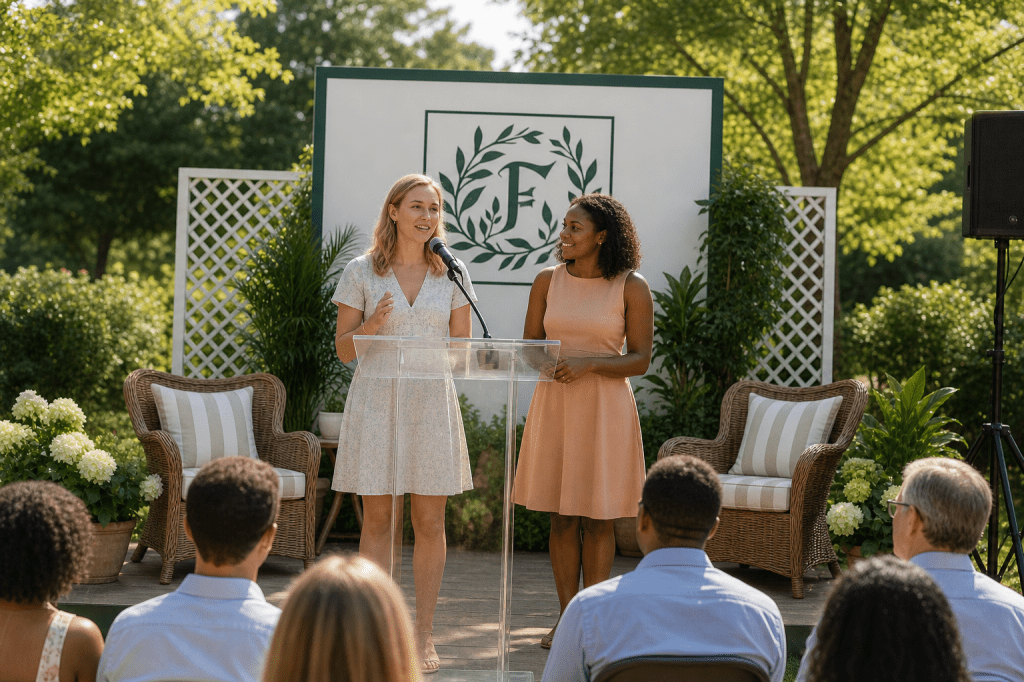
I sat in a public meeting with representatives from multiple social service organizations. We gathered to discuss working together to meet local needs.
Partway through, someone raised their hand and said, “I actually receive services. I am one of the people you’re talking about. When you say ‘them,’ you’re talking about me. I am sitting right here.”
That moment stayed with me because it revealed something that happens across organizations every day. We often talk about the people we serve as if they are separate from the people doing the serving. Not intentionally. Most often, out of habit and language patterns we inherited.
Still, those bad habits communicate power dynamics whether we mean to or not.
What struck me most was how easily I have fallen into the same phrasing. It reminded me that I am part of this dynamic, not outside it.
The Words We Use Shape How We See Our Community
When we default to language that divides “us” from “them,” we frame the community as two groups:
- those who help (staff, volunteers, donors)
- those who need help
But that is not how real life works.
Many of us move in and out of need over time. A donor may later need assistance. A volunteer may once have received help. A staff member may have grown up in a program they now serve.
Communities are ecosystems, not categories.
How can we practice seeing our neighbors with shared identity, not as roles in a service model?
Start Here
Authentic change starts with new habits.
I challenge you to use the same language in every setting and for every audience.
By that, I mean consistency in tone, labels, framing, and the way you describe the people you walk alongside.
A helpful first step is noticing when you segment your message without intending to.
When I began adopting unsegmented communication, I was surprised by how often my default language created separation. Paying attention changed both my language and my internal posture.
Let’s practice using consistent language across settings:
Internal audiences
- Community meetings
- Staff emails
- Board agendas
- Meeting minutes
External audiences
- Website copy
- Annual appeals
- Public meetings
- Conversations with donors
- Social posts
Using the same words as if everyone is in the room forces us to speak with shared identity rather than assigned roles.
Align Language With Shared Identity
| Instead of this | Try this |
|---|---|
| “We serve low-income families” | “We work alongside families who are rebuilding stability” |
| “Our clients need access to resources” | “Our neighbors are navigating complex challenges” |
| “We help them” | “We work together” |
Small shifts create meaningful change. People feel seen, not categorized.
Our Work Is With People
Remember that the mission is not for people.
It is with people.
This mindset shift is not always comfortable. It asks us to examine assumptions, rethink our roles, and see ourselves as part of the same community rather than separate from it.
The moment in that meeting reminded me that community is not something we serve from a distance. It is something we belong to.